— p. 1 — UNCLASSIFIED
1
UNCLASSIFIED
All-domain Anomaly Resolution Office
U.S. Department of Defense
Case: “Mt. Etna Object”
Case Resolution | 28 April 2025
Case Synopsis
Location: Mt. Etna, Italy
Date: December 2018
Object Altitude (reported): 500 feet
Object Altitude (assessed): 15,000 feet
Object Speed (reported): 345 mph
Object Speed (assessed): 24 mph
Object Shape (reported): Round
Object Shape (assessed): Spherical
Reporter: U.S. Military UAS operators
Data Type: Infrared
Reported Behavior: An object moving at
high speeds through Mt. Etna’s ash plume.
Assessed Behavior: The object did not
demonstrate anomalous performance
characteristics.
Confidence: Moderate confidence the object
was a balloon. High confidence the object did
not demonstrate anomalous performance
characteristics.
AARO Assessment and Case Status
AARO assesses with moderate confidence
that the object was a balloon. AARO
assesses with high confidence that the
object did not exhibit anomalous behavior.
Case Overview
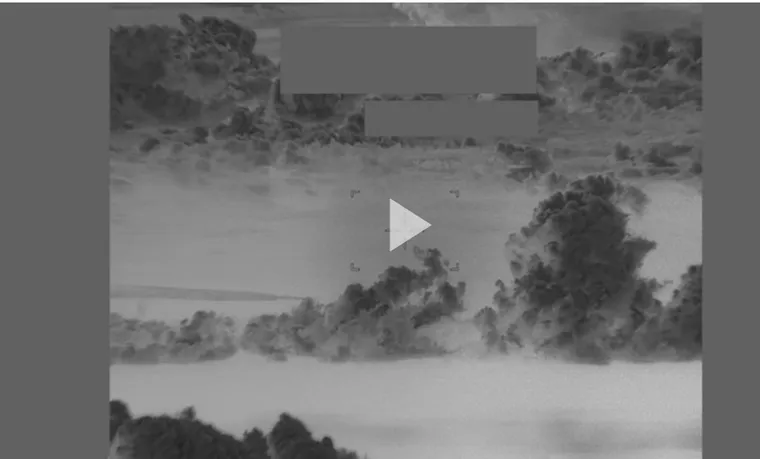
In December 2018, a shortwave infrared
(SWIR) camera onboard a U.S. military
uncrewed aerial system (UAS) operating
near U.S. Naval Air Station Sigonella over
the Mediterranean Sea south of Sicily,
Italy, captured 12 minutes of infrared video
of an eruption of Mt. Etna. For
approximately four and a half minutes, a
round object appears on the video and
seems to exhibit anomalous performance
characteristics by moving at high speeds
and transiting a superheated gas and ash
plume produced by the eruption.
The UAS operator reported that the
object’s flight behavior was seemingly
unaffected by transiting the plume, with no
discernable impact on its performance,
altitude, or bearing. The operator reported
the object’s speed as approximately 555 kph (345 mph).
Key Findings
AARO assesses with high confidence that:
• Optical effects, turbulent atmospheric conditions, and limitations in sensor capability
distorted the object’s apparent behavior, leading to an inaccurate initial assessment of
its performance characteristics.
25-P-0694
— 第 1 页 — 未分类
全域异常解决办公室
美国国防部
案例:“埃特纳火山物体”
案例结案 | 2025年4月28日
案例概要
地点:意大利埃特纳火山
日期:2018年12月
物体高度(报告):500英尺
物体高度(评估):15,000英尺
物体速度(报告):345英里/小时
物体速度(评估):24英里/小时
物体形状(报告):圆形
物体形状(评估):球形
报告者:美国军方无人机系统操作员
数据类型:红外
报告的行为:一个高速穿过埃特纳火山灰柱的物体。
评估的行为:该物体未表现出异常性能特征。
置信度:中等置信度认为该物体是一只气球。高置信度认为该物体未表现出异常性能特征。
AARO 评估与案例状态
AARO 以中等置信度评估该物体是一只气球。AARO 以高置信度评估该物体未表现出异常行为。
案例概述
2018年12月,一台搭载于在意大利西西里岛以南地中海上空、美国西戈内拉海军航空站附近作业的美国军方无人机系统(UAS)上的短波红外(SWIR)相机,拍下了12分钟埃特纳火山喷发的红外视频。在约四分半钟内,视频中出现一个圆形物体,似乎通过高速移动并穿越喷发产生的过热气体与火山灰柱而表现出异常性能特征。
UAS 操作员报告称,该物体的飞行行为似乎不受穿越火山灰柱的影响,其性能、高度或航向均无明显影响。操作员报告物体速度约为555千米/小时(345英里/小时)。
主要发现
AARO 以高置信度评估:
• 光学效应、湍流大气条件以及传感器能力的局限扭曲了物体的表观行为,导致对其性能特征的初步评估不准确。
25-P-0694
— p. 2 — UNCLASSIFIED
• The object did not exhibit anomalous speeds or other behavior exceeding known state-of-
the-art performance characteristics. It did not pass through the volcano’s ash plume.
Performance Characteristics
Object Speed: AARO assessed that the object’s speed was approximately 39 kph (24 mph),
moving generally west-to-east, consistent with wind speed and direction. The object’s apparent
high speed is attributable to motion parallax. Motion parallax is an optical effect that induces an
observer to perceive that a stationary or slow-moving object is moving much faster than its
actual speed when viewed from a moving frame of reference. The more quickly an observer
moves relative to an observed object, the more pronounced this effect is. The UAS platform’s
relative motion made the object appear to move at high speeds.
Object Flight Path: AARO estimated the object's distance from the UAS platform by
comparing its speed, the cloud deck’s apparent motion, and the wind speed to plot its trajectory.
Applying this methodology, AARO created a model that accurately predicted the object’s
location later in the video, validating the conclusion that the object moved at wind speed and
heading. (Figure 1) This predictive model aligned with the findings of an independent 3-D model
produced by an AARO partner, further validating the methodology.
(UNCLASSIFIED)
(UNCLASSIFIED)
Figure 1: Predictive trajectory analysis revealed the object’s position when it was visually
undetectable. Pixel examination using post-processing filters rendered the object visible,
validating this approach.
Apparent Anomalous Material Properties: AARO applied comprehensive full-motion video
(FMV) analysis, 3-D modeling, pixel examination, and wind speed calculations to assess that the
object was much closer to the SWIR sensor than initially reported. The object did not pass
through the volcano’s ash plume. The object was approximately 170 kilometers (106 miles)
away from the plume during the recording. AARO conducted a comprehensive FMV analysis to
conclude that the object was approximately 30 km (19 miles) from the SWIR sensor. (Figure 2)
AARO also applied kinematics and photogrammetry techniques to develop a 3-D model of the
event.
2
UNCLASSIFIED
— 第 2 页 — • 该物体未表现出超出已知最先进性能特征的异常速度或其他行为。它并未穿过火山的灰柱。
性能特征
物体速度:AARO 评估物体速度约为39千米/小时(24英里/小时),大致自西向东移动,与风速和风向相符。物体的表观高速可归因于运动视差。运动视差是一种光学效应,当从一个移动的参考系观察时,会使观察者觉得静止或缓慢移动的物体的移动速度远快于其实际速度。观察者相对于被观察物体移动得越快,这种效应越明显。UAS 平台的相对运动使该物体看似高速移动。
物体飞行路径:AARO 通过比较物体速度、云层的表观运动及风速来绘制其轨迹,从而估计物体与 UAS 平台的距离。运用此方法,AARO 建立的模型准确预测了物体在视频后段的位置,验证了物体以风速和风向移动的结论。(图1)该预测模型与一个 AARO 合作伙伴制作的独立三维模型的发现相吻合,进一步验证了该方法。
图1:预测性轨迹分析揭示了物体在视觉上无法探测时的位置。使用后处理滤镜进行的像素检查使物体可见,验证了这一方法。
表观异常材料特性:AARO 运用全面的全动态视频(FMV)分析、三维建模、像素检查与风速计算,评估该物体比最初报告的更接近 SWIR 传感器。该物体并未穿过火山的灰柱。在录制期间,该物体距灰柱约170千米(106英里)。AARO 进行了全面的 FMV 分析,得出该物体距 SWIR 传感器约30千米(19英里)的结论。(图2)AARO 还运用运动学与摄影测量技术建立了该事件的三维模型。
— p. 3 — UNCLASSIFIED
3
UNCLASSIFIED
Figure 2: AARO’s top-down reconstruction of the event depicting the object’s distance from the
UAS platform. (not to scale)
Observable Characteristics and Attribution
Size and Shape: AARO employed pixel examination to conclude with moderate confidence that
the object was spherical. Its approximate diameter was 0.3 meters (1 foot). (Figure 3)
Attribution: Due to the object’s size and performance characteristics, AARO assesses with
moderate confidence that the object is a balloon.
(UNCLASSIFIED)
(UNCLASSIFIED)
— 第 3 页 — 图2:AARO 对事件的俯视重建,描绘物体与 UAS 平台的距离。(非按比例)
可观察特征与归因
尺寸与形状:AARO 采用像素检查,以中等置信度得出该物体为球形的结论。其大致直径为0.3米(1英尺)。(图3)
归因:鉴于物体的尺寸与性能特征,AARO 以中等置信度评估该物体是一只气球。
— p. 4 — UNCLASSIFIED
(UNCLASSIFIED)
(UNCLASSIFIED)
Figure 3: The object at a higher magnification (0749Z) and enhanced using post-processing
tools (0753Z). The object is spherical with an approximate diameter of one foot.
Data Quality and Methodology: AARO assesses that the sensor data associated with the event
provides sufficiently detailed information to resolve this case with moderate confidence.
However, sensor limitations and atmospheric turbulence constrain the modes of rigorous analysis
that can be applied to identify the object conclusively.
Sensor Effects and Limitations: SWIR sensors identify targets by detecting differences in
infrared energy relative to the surrounding environment. Cool objects predominantly reflect
shortwave infrared energy, while hot targets predominantly emit shortwave infrared energy.
These sensors do not employ active range finding, and obtaining the accurate range to a target is
highly dependent on environmental factors. The thermally turbulent atmospheric conditions near
an actively erupting volcano likely disrupted the sensor's ability to capture accurate data.
Volcanic ash, composed of fine particulates, scatters and absorbs infrared radiation in
unpredictable ways, creating a “noisy” thermal environment. These conditions further reduce the
sensor’s accuracy by distorting the object’s signature.
The UAS platform’s SWIR camera was optimized for air-to-ground observation rather than air-
to-air detection during the encounter. In this configuration, SWIR sensors cannot detect and
track airborne objects reliably and cannot provide an accurate range to the object. Airborne
objects recorded by sensors configured in this way often appear indistinct, blurry, or featureless,
even if they would have visually observable surface features under different collection
conditions.
4
UNCLASSIFIED
— 第 4 页 — 图3:更高放大倍率下(0749Z)以及使用后处理工具增强后(0753Z)的物体。该物体为球形,大致直径为一英尺。
数据质量与方法:AARO 评估与该事件相关的传感器数据提供了足够详尽的信息,可以中等置信度结案。然而,传感器局限与大气湍流制约了可用于明确识别该物体的严格分析方式。
传感器效应与局限:SWIR 传感器通过探测相对于周围环境的红外能量差异来识别目标。冷物体主要反射短波红外能量,而热目标主要发射短波红外能量。这类传感器不采用主动测距,获得到目标的准确距离高度依赖于环境因素。活跃喷发火山附近的热湍流大气条件很可能干扰了传感器捕捉准确数据的能力。由细微颗粒构成的火山灰会以不可预测的方式散射和吸收红外辐射,造成“嘈杂”的热环境。这些条件通过扭曲物体的信号进一步降低了传感器的准确性。
此次遭遇中,UAS 平台的 SWIR 相机针对空对地观察而非空对空探测进行了优化。在此配置下,SWIR 传感器无法可靠地探测和跟踪空中物体,也无法提供到物体的准确距离。以这种方式配置的传感器所记录的空中物体往往显得不清晰、模糊或无特征,即便在不同的采集条件下它们本会具有视觉上可观察的表面特征。
— p. 5 — 5
UNCLASSIFIED
UNCLASSIFIED
These factors likely influenced the reporter’s perceptions of the event, leading to unreliable
initial conclusions about the object’s speed and performance characteristics. AARO cautions that
the SWIR sensor’s image data should not inform any conclusion of the object’s performance
characteristics because of the significant limitations imposed by atmospheric turbulence, post-
processing effects, and contrast stretching. These effects produce visual artifacts such as
flickering, pulsating, and luminosity differences, significantly reducing the reliability of
traditional FMV analysis and pixel analysis techniques.
Alternative Hypotheses
Anomalous Performance Characteristics: An AARO partner’s initial assessment suggested
the object may have moved up to 5,470 kph (3,400 mph) and that it transited the volcano’s ash
plume. AARO and its other partners do not concur with these findings. AARO’s pixel
examination analysis determined that the object was much nearer to the sensor than initial
estimates, exacerbating the effects of motion parallax and leading to an incorrect assessment of
the object’s speed.
An AARO partner compared the luminosity of the object’s pixels to those around it and assessed
that the object’s gradient luminosity remained constant before, during, and after it appeared to
transit the plume. This conclusion would place the object within the volcano’s ash plume. AARO
and its other partners do not concur with these findings because the UAS platform’s SWIR
sensor cannot provide accurate range-finding data given the atmospheric turbulence. AARO
produced a validated 3-D model demonstrating that the partner’s assessment depends on
unreliable and inaccurate input data.
Bird: Initial assessments from AARO’s partners found that the object appears to flicker in the
sensor display at a steady frequency, which is highly suggestive of a bird flapping its wings to
maintain steady flight. On further analysis, AARO’s partners found that thermal turbulence,
post-processing effects, and contrast stretching produced visual artifacts such as flickering,
pulsating, and luminosity differences in the video footage. Therefore, AARO and its partners
discarded this initial assessment, concurring that the object was unlikely to have been a bird and
was likely a balloon.
AARO is not a member of the intelligence community. This AARO information report should
not be considered finished intelligence. It may contain references to finished intelligence
reports and/or information provided by AARO’s coordinating interagency partners to provide
context, show relevance, or substantiate AARO analytic perspectives.
— 第 5 页 — 这些因素很可能影响了报告者对该事件的感知,导致对物体速度与性能特征得出不可靠的初步结论。AARO 提醒,由于大气湍流、后处理效应与对比度拉伸所施加的重大局限,SWIR 传感器的图像数据不应用于得出任何关于物体性能特征的结论。这些效应会产生闪烁、脉动及亮度差异等视觉伪影,显著降低传统 FMV 分析与像素分析技术的可靠性。
替代假说
异常性能特征:一个 AARO 合作伙伴的初步评估提出,该物体可能以高达5,470千米/小时(3,400英里/小时)的速度移动,并穿越了火山的灰柱。AARO 及其其他合作伙伴不认同这些发现。AARO 的像素检查分析确定该物体比初步估计更靠近传感器,加剧了运动视差的效应,导致对物体速度的错误评估。
一个 AARO 合作伙伴将物体像素的亮度与其周围像素进行比较,评估认为物体的梯度亮度在它看似穿越灰柱之前、之中和之后保持恒定。这一结论会将物体置于火山的灰柱之内。AARO 及其其他合作伙伴不认同这些发现,因为鉴于大气湍流,UAS 平台的 SWIR 传感器无法提供准确的测距数据。AARO 制作了一个经过验证的三维模型,表明该合作伙伴的评估依赖于不可靠且不准确的输入数据。
鸟:AARO 合作伙伴的初步评估发现,该物体在传感器显示中以稳定频率闪烁,这强烈暗示是一只鸟扇动翅膀以保持平稳飞行。经进一步分析,AARO 的合作伙伴发现热湍流、后处理效应与对比度拉伸在视频画面中产生了闪烁、脉动及亮度差异等视觉伪影。因此,AARO 及其合作伙伴排除了这一初步评估,一致认为该物体不太可能是鸟,而很可能是一只气球。
AARO 不是情报界成员。本 AARO 信息报告不应被视为成品情报。它可能引用成品情报报告和/或 AARO 协调的跨机构合作伙伴提供的信息,以提供背景、显示相关性或佐证 AARO 的分析观点。